Melon Fruit Pattern: A Versatile Digital Asset for Designers and Creators
Whether you're crafting a summer-themed packaging label, designing a playful children's book cover, or building a vibrant social media campaign, the Melon Fruit Pattern delivers instant freshness, visual rhythm, and seasonal appeal. This isn’t just another fruit motif—it’s a thoughtfully composed, production-ready design resource engineered for flexibility across platforms, scales, and creative workflows.
What Exactly Is the Melon Fruit Pattern?
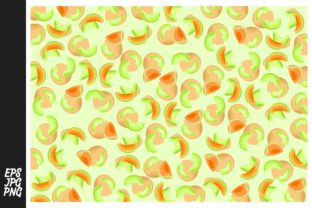
The Melon Fruit Pattern is a seamless, repeatable digital illustration featuring stylized melon elements—think juicy green rinds, subtle veining, soft coral flesh tones, and occasional black seeds—arranged in a balanced, non-repetitive rhythm. Unlike generic clipart or overly literal stock vectors, this pattern strikes a refined balance between botanical accuracy and decorative function. It avoids cliché while retaining immediate recognizability—your audience knows it’s melon, but they also sense craftsmanship and intention.
Crucially, this download includes three essential file formats: JPG, EPS, and PNG. That triad isn’t arbitrary—it reflects real-world usage needs. Each format serves a distinct purpose, and together, they ensure you’re covered whether you’re prepping for print, building a responsive website, or compositing in Photoshop.
Why File Format Choice Matters—And How Each One Fits In
- JPG: Ideal for web use, email banners, or quick mockups where small file size and universal compatibility matter most. It’s compressed, so it loads fast—but keep in mind it doesn’t support transparency. Use it when the background is solid (white, light blue, cream) and resolution up to 300 DPI is sufficient.
- PNG: Your go-to for layered digital work. With full alpha-channel transparency, it drops cleanly over photos, gradients, or textured backgrounds—perfect for app UI elements, Instagram story overlays, or product mockups where your melon pattern needs to breathe over complex imagery.
- EPS: The professional anchor. As a vector format, it scales infinitely without pixelation. Print designers rely on EPS for labels, fabric swatches, signage, or large-format wall graphics. If you’re sending files to a printer—or plan to resize the pattern from business card to billboard—the EPS version preserves crisp edges and editable color values.
This multi-format approach removes guesswork. You’re not forced to convert or compromise. You simply select the right tool for the job—and move forward.
Beyond Aesthetics: Functional Strengths of the Melon Fruit Pattern
A great pattern does more than look nice. It solves problems. The Melon Fruit Pattern excels in several practical ways:
- Seamless tiling—tested rigorously across canvas sizes from 1200×1200 px to 5000×5000 px—ensures no awkward seams or misaligned repeats, even when scaled or rotated.
- Color-optimized palette—designed with CMYK-safe greens and Pantone-friendly corals—means what you see on screen translates reliably to printed materials, reducing costly reprints or color corrections.
- Low visual noise—the spacing between melon motifs is generous enough to avoid clutter, making it ideal for backgrounds behind text, subtle textile designs, or minimalist branding applications.
- Cross-industry adaptability—from organic juice brands seeking authenticity to tech startups launching wellness apps, the melon motif conveys refreshment, natural energy, and approachability without feeling childish or dated.
Consider a café chain rolling out new reusable cups: using the Melon Fruit Pattern in EPS for the cup’s wrap ensures sharp detail at any curvature, while the PNG version works seamlessly in their Shopify product gallery—showing the design “in context” against lifestyle photos.
Where This Pattern Fits Naturally—And Where It Surprises
You’ll find the Melon Fruit Pattern thriving in expected spaces: food packaging, summer festival merch, baby shower invites, spa branding. But its versatility shines brightest in less obvious contexts.
Interior designers use it as a subtle accent in kitchen tile mockups—layered beneath glass or applied to cabinet fronts via vinyl decal. Educators incorporate it into printable flashcards or classroom posters about nutrition, appreciating how the friendly, non-intimidating melon shapes help young learners connect with healthy eating concepts.
In UX design, it appears as a gentle background texture behind form fields on hydration-tracking apps—adding warmth without competing for attention. Even architects have repurposed it as a conceptual overlay in presentation decks for eco-conscious residential projects, where melon’s associations with water efficiency and local agriculture reinforce sustainability narratives.
What makes this possible? Intentional negative space, restrained contrast, and a human-drawn quality that avoids sterile digital perfection. It feels handmade—not algorithmically generated.
Smart Usage Tips for Best Results
Not every pattern works equally well everywhere. Here’s how to get the most from your Melon Fruit Pattern download:
- Test scale first: Before committing to a large print run, render a 10×10 inch sample at actual size. Patterns can behave differently when enlarged—what reads as delicate at thumbnail size may feel overwhelming on a tote bag.
- Adjust opacity strategically: At 15–30% opacity, the pattern becomes an elegant watermark or tone-on-tone texture. At 70–100%, it commands attention—ideal for apparel or statement stationery.
- Recolor thoughtfully: The EPS file allows easy hue shifts in Illustrator. Try desaturating greens for a vintage linen look, or shifting coral toward peach for a softer, gender-neutral palette.
- Avoid over-layering: Pair it with clean sans-serif typefaces—not ornate scripts—to maintain readability and modern clarity.
One designer we spoke with used the Melon Fruit Pattern as a base layer for a line of ceramic mugs, then hand-painted subtle gold leaf accents over select melon segments post-firing. The result? Mass-producible consistency with artisanal warmth—a hybrid approach only possible because the underlying pattern was both precise and expressive.
Choosing the Right Melon Fruit Pattern—What to Watch For
Not all melon-themed assets are created equal. When evaluating options—or deciding whether this specific Melon Fruit Pattern fits your project—consider these checkpoints:
- Authentic texture cues: Does the rind show gentle variation—not flat color blocks? Are seeds placed organically, not in rigid grids?
- Export integrity: Do the JPG and PNG files match the EPS in composition and alignment? Some bundles crop or shift layers unintentionally during export.
- Licensing clarity: Confirm commercial use is permitted, especially if you’re applying it to client work or products for resale. This Melon Fruit Pattern includes standard extended license coverage—no hidden restrictions.
- Format readiness: Are files delivered in industry-standard naming (e.g., melon-pattern-eps.ai, melon-pattern-png.png)—not generic labels like “design123.jpg”? Clear naming saves hours during asset management.
If you’ve ever spent time manually adjusting tile boundaries in Photoshop or struggled to match vector colors to a brand’s hex code, you’ll appreciate how this Melon Fruit Pattern eliminates those friction points upfront.
Final Thought: Pattern as Purposeful Communication
At its core, the Melon Fruit Pattern is more than decoration—it’s a quiet translator of mood, message, and meaning. It signals vitality without shouting. Suggests natural origins without leaning into clichéd “farm-fresh” tropes. Offers familiarity with just enough nuance to feel intentional.
When your project calls for warmth, renewal, or a touch of summery ease—and when you need reliable, adaptable, professionally prepared files—the Melon Fruit Pattern stands ready. With JPG for speed, PNG for flexibility, and EPS for precision, it meets you where you are, in the format you need, without asking you to settle.